
7.9K
Downloads
275
Episodes
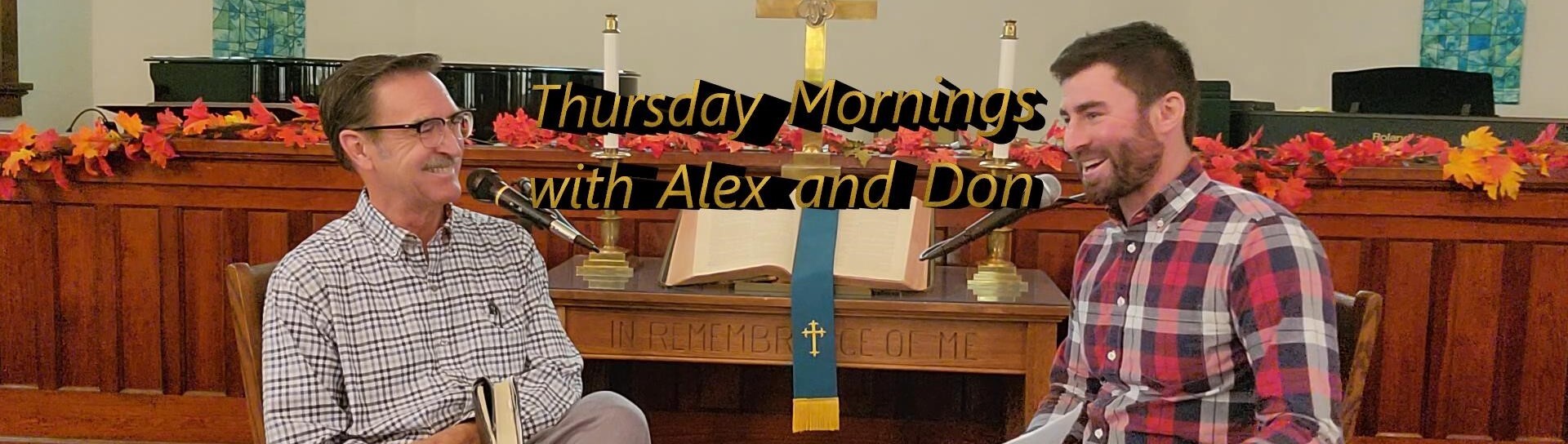
RELISH is the ultimate Christian podcast where we dive deep into the timeless truths of the Bible to answer your toughest questions about Christianity and the Christian faith. Join us each week as we tackle challenging topics head-on, fearlessly exploring the intersections of faith, reason, and culture. Whether you’re a skeptic seeking answers, a believer looking to deepen your understanding, or simply curious about the Christian worldview, our podcast provides a welcoming space for dialogue and discovery. Join the conversation as we navigate the complexities of faith with humility and honesty.
email your questions to tmadask@gmail.com
Episodes

5 hours ago
5 hours ago
19 min
Should Christians celebrate Halloween? What began as a discussion of holiday history raises a more difficult question: can Christians participate in a cultural tradition when some of its history, symbols, and imagery conflict with their beliefs?
In this episode of RELISH, Alex Zimmerman and Don Patterson examine the origins of Halloween, All Hallows' Eve, and All Saints' Day, tracing how older customs, medieval beliefs about spirits, and modern commercial culture shaped the holiday we recognize today.
The discussion moves beyond history to the question of Christian discernment. Does a tradition's origin determine whether participating in it is wrong? Can ordinary activities such as trick-or-treating, costumes, and neighborhood celebrations be separated from darker imagery? What does Scripture teach about spiritual warfare, compromise, and giving evil a foothold?
Alex and Don consider differing Christian perspectives, including family traditions, costume choices, candy, safety, church-hosted trunk-or-treat events, and alternatives connected with All Saints' Day.
The goal isn't to dismiss sincere concerns or declare every family must make the same decision. It's to examine the reasoning behind those decisions and consider how Christians can apply biblical principles while treating one another with respect.
Discussion question: Should Christians avoid Halloween, participate selectively, or treat it as an ordinary cultural celebration? What biblical principles should guide that decision?
Chapters
00:00:09 Halloween's Origins and Meaning
00:03:02 Commercialization and Modern Traditions
00:04:46 Demonic Imagery or Decoration?
00:07:04 Halloween as an American Tradition
00:09:20 From All Saints' Day to Halloween
00:11:25 The Case for Reclaiming the Holiday
00:12:34 Deception and Spiritual Discernment
00:15:51 Spiritual Footholds and Faith
00:17:44 Trunk-or-Treat and Family Safety
00:18:50 Respecting Christian Differences
RELISH explores theology, biblical interpretation, apologetics, and real-world questions through thoughtful Christian conversation.

Oct 8, 2026
Oct 8, 2026
42 min
Podcast Description
Can anyone really be neutral about what they believe?
Alex Zimmerman and Pastor Don Patterson examine how our beliefs shape far more than our private opinions. They influence the way we treat people, understand morality, evaluate laws, participate in public life, and decide what kind of society we want to create.
The conversation begins with a simple observation: everyone has convictions. Even when we claim to be neutral, our assumptions about truth, human nature, morality, and what is good still influence our decisions.
Alex and Don look at some of the forces that shape those assumptions—including family, education, media, advertising, algorithms, incentives, and laws.
But the conversation doesn't stop at politics or culture. They ask an important Christian question: How should Christians engage people who strongly disagree with them?
The answer isn't to avoid difficult conversations, nor is it to treat disagreement as evidence of bad character. Christians are called to speak honestly while remembering that they are not morally superior to the people they disagree with.
The discussion also considers Christianity's central claim about human need, grace, sin, reconciliation, and the transformation Jesus brings.
This episode is ultimately about truth, conviction, humility, and how we disagree without turning other people into enemies.
Chapters
00:00:09 The Question of Neutrality
00:02:48 Can Anyone Really Be Neutral?
00:13:28 How Society Shapes What We Believe
00:24:41 Can We Disagree Without Hating?
00:32:26 Grace Without Moral Superiority
00:38:46 How Jesus Changes the Conversation
Oct 1, 2026
Oct 1, 2026
23 min
Who really killed Jesus?
At first, the answer seems straightforward: Roman soldiers carried out the crucifixion. But the biblical account involves far more people—Judas betrayed Jesus, Jewish leaders handed Him over, the crowd demanded Barabbas, and Pontius Pilate authorized the execution.
So who was actually responsible?
Alex Zimmerman and Pastor Don Patterson examine the historical and biblical evidence surrounding Jesus' death and then move to the deeper theological question: How can Jesus be genuinely killed by human agents while also willingly laying down His own life?
The discussion looks at Judas, Caiaphas, the Sanhedrin, the crowd, Pilate, Roman authority, and the prophetic passages that anticipated Christ's suffering. Psalm 22, Isaiah 53, John 10, and Hebrews 9–10 help explain why the cross cannot be understood simply as a political execution that went wrong.
The conversation ultimately becomes personal. The Bible connects Jesus' death to human sin, which raises an uncomfortable question: What does it mean to say, “I killed Christ”?
The answer isn't that every person physically participated in the crucifixion. It is that the sin Christ came to deal with is our sin. Understanding that changes how we think about repentance, humility, sacrifice, and the gospel.
Sep 24, 2026
Sep 24, 2026
30 min
What did Jesus mean when He said, “I AM”?
In John's Gospel, Jesus makes several remarkable “I AM” statements. He calls Himself the bread of life, the light of the world, the good shepherd, and the true vine. But one statement stands out:
“Before Abraham was, I am.”
Why would Jesus speak this way? And why did His opponents react so strongly?
In this episode of Relish, Alex and Don examine Jesus' “I AM” statements and their connection to God's revelation of Himself in the Old Testament.
The discussion then moves from theology to application.
Knowing God's name is one thing. Knowing God personally is another.
The hosts explore what reconciliation through Christ means, how the Holy Spirit gives believers a new identity, and what it means to live as a child and heir of God.
The conversation also addresses shame, addiction, testimony, prayer, Christian community, baptism, communion, self-examination, and the struggle to allow God to lead rather than simply giving Him a place in our religious life.
At the center of it all is one question:
When Jesus said “I AM,” was He claiming to be God?
00:00:57 — “I AM” and Identity
00:03:09 — Did Jesus Claim to Be God?
00:07:37 — Knowing God vs. Knowing About God
00:11:50 — New Life Through the Spirit
00:15:55 — Are Your Names Written in the Book of Life?
00:19:53 — Is Jesus Really Lord of Your Life?
00:22:33 — What Does a New Identity Look Like?
00:25:45 — Why You Should Examine Yourself First
00:27:18 — “It Is No Secret What God Can Do”
Sep 17, 2026
Sep 17, 2026
24 min
Who Is God? Exploring the Names of the Divine
Who is God, and how has He revealed Himself through Scripture?
In this episode of Relish, Alex Zimmerman and Pastor Don Patterson examine the biblical names of God, including Yahweh, Jehovah, Elohim, Adonai, El Shaddai, Jehovah Jireh, and Emmanuel.
The conversation begins with the meaning and history of God's names before exploring Moses' encounter with God at the burning bush. What does “I AM WHO I AM” reveal about God's eternal and self-existent nature?
The hosts also discuss:
- The relationship between Yahweh and Jehovah.
- The meaning of Elohim and its use in Scripture.
- Questions surrounding the Trinity and heavenly beings.
- How God's names reveal His character, presence, and provision.
- Why knowing God matters for identity and obedience.
Through biblical teaching, personal stories, and pastoral reflection, this episode invites listeners to consider whether they truly understand the God they claim to worship.
Sep 10, 2026
Sep 10, 2026
27 min
Can You Really Become a New Person?
Names are more than labels in the Bible. They often communicate identity, family history, circumstances, and sometimes God's purpose.
In this episode of Relish, Alex Zimmerman and Don Patterson begin by drafting some of the most difficult—and perhaps least advisable—names to give a child from the Bible. From Ichabod and Judas to Dorcas and Mahar-shalal-hash-baz, the conversation starts with humor.
But then it moves to a much bigger question.
Why did names matter so much in Scripture?
Why did Jacob become Israel? What did Jesus mean when He called Simon “Peter”? Why is Joseph remembered as Barnabas? And what do these examples teach us about identity and redemption?
The conversation also addresses an important misconception: receiving a new identity does not mean becoming instantly perfect.
If God makes someone new, why do old struggles remain?
This episode explores what the Bible actually says about names, identity, transformation, and the relationship between who you were and who God calls you to become.
00:00:29 Why Names Matter: Identity and Redemption
00:01:58 Drafting the Worst Bible Names
00:06:34 Bible Names We'd Actually Bring Back
00:07:29 What Do Names Mean in the Bible?
00:10:32 Why God Changed People's Names
00:17:37 Did Peter and Paul Really Get New Names?
00:21:43 Jacob Becomes Israel: A New Identity
00:25:03 New Identity Doesn't Mean Instant Perfection
Sep 3, 2026
Sep 3, 2026
21 min
What does the Bible actually say about Israel—and what does that mean for Christians today?
In Part 2 of Relish, Alex Zerman and Pastor Don Patterson continue their discussion about Jesus, Judaism, the early church, Paul, Israel, and biblical prophecy.
The conversation begins with the Jewish roots of Christianity and the events surrounding Jesus' crucifixion and resurrection. From there, they examine Acts 2, the persecution of the early church, Stephen's martyrdom, and Saul's dramatic conversion into Paul.
The discussion then turns to Romans 11 and Paul's metaphor of the olive tree. What does it mean for Gentile Christians to be "grafted in"? Has God rejected Israel? How should Christians understand the relationship between Israel, the Jewish people, and the Church?
Those questions lead directly into the modern state of Israel and biblical prophecy. Does modern Israel have a unique role in God's plan? How should Christians think about Revelation and the end times? And how do we distinguish biblical covenant promises from the political actions of a modern nation?
Throughout the conversation, Alex and Don return to the same principle: Scripture must be the standard for Christian belief.
The goal isn't to settle every debate about Israel or prophecy in one conversation. It is to encourage careful biblical thinking, reject conspiratorial shortcuts, distinguish political questions from theological ones, and keep Jesus at the center.
Chapters
00:00:29 — Jewish Roots, Jesus, and the Cross
00:01:16 — The Holy Spirit, Saul, and Persecution
00:03:22 — Romans 11 and the Olive Tree
00:06:35 — Does Modern Israel Have a Biblical Role?
00:08:37 — Israel, Prophecy, and End-Times Bloodshed
00:14:10 — Scripture as the Standard
00:18:17 — Wisdom, Discernment, and Knowing Christ
00:18:53 — Tribulation and the Hope of Christ
Listen with your Bible open, especially Romans 9–11. The important question isn't simply what Christians have traditionally said about Israel. It's what Paul actually wrote.
Aug 27, 2026
Aug 27, 2026
24 min
Who exactly does the Bible mean when it talks about Jews, Israelites, Hebrews, and Israel?
In this episode of Relish, Alex Zimmerman and Pastor Don Patterson examine how these terms developed throughout Scripture and why Christians should be careful about treating them as interchangeable.
The conversation moves from Abraham and the calling of Israel, through the kingdom and diaspora, to the New Testament and Revelation's 144,000. Along the way, we discuss the difference between ethnicity, religion, politics, biblical Israel, and the modern nation-state of Israel.
The episode also begins with a practical discipleship question: If you sell an animal knowing it will be used in another religion's ritual, where does personal responsibility begin?
Ultimately, the discussion comes back to a larger biblical question: Why did God's chosen people repeatedly rebel against Him, and what should Christians learn from that?
The answer challenges both simplistic views of Israel and simplistic views of ourselves.
00:00:44 — Selling Goats for Religious Sacrifice: Where Is the Line?
00:03:12 — When Does Religious Participation Become Our Responsibility?
00:05:17 — Who Are the Jews? Israel, Israelites, and Hebrews Explained
00:09:54 — The 144,000 in Revelation: Who Are They?
00:14:57 — Why Were the Jews Scattered? Understanding the Diaspora
00:18:46 — God Chose Israel to Bless the Nations—So Why Did They Rebel?
00:23:01 — The Sanhedrin, Pharisees, and Sadducees: Who Were They?
Aug 25, 2026
Aug 25, 2026
23 min
Join hosts Alex Zimmerman and Don Patterson for a lively Relish conversation that moves from friendly Bible-study banter into a serious exploration of how Christians should respond when a mosque is proposed in their town. With references to Sunday school dynamics, Bible translations (including The Message and original Greek), and real-life study-group questions, the episode blends humor and pastoral concern.
The main discussion centers on a recent controversy about a mosque being built and asks whether Islam—as presented in some public debates—is primarily a religion or a political system. The hosts weigh First Amendment freedoms against worries about political ideology and radicalization, share personal experiences with Muslim neighbors, and consider how Sharia law and cultural separatism might clash with American civic life.
Practical issues are raised as well: is it appropriate for farmers to sell animals for religious slaughter (halal or otherwise)? What do Scripture and tradition say about supplying animals used in worship to other faiths? The hosts reference Levitical thinking and Acts 10 and promise further research to clarify any biblical restrictions on commerce tied to religious rites.
Throughout the episode they emphasize discernment, prayer, and the role of conscience when legal options feel morally complicated. They discuss how Christians can be hospitable without compromising community safety, the difference between personal conviction and public policy, and the importance of seeking God’s guidance even when answers feel uncomfortable or unexpected.
Listeners can expect candid, at-times-provocative dialogue, a mix of pastoral wisdom and common-sense practicality, and follow-up plans: next episode will dig into conversations often framed as being "about the Jews," aiming to bring clarity and care to how we talk about different faith communities.
Aug 13, 2026
Aug 13, 2026
19 min
One episode. Three foundational questions.
What would happen if everyone in society were genuinely Christian? Does the Bible teach that communion literally becomes the body and blood of Christ? And is there good historical evidence that the Bible we read today accurately reflects the original writings?
Don, Grant, and Rowan examine these questions by comparing biblical texts, historical evidence, and competing Christian traditions. Along the way, they discuss John 6, transubstantiation, the Dead Sea Scrolls, New Testament manuscripts, and why textual reliability matters for everyday faith.
The episode concludes with a personal farewell as Rowan leaves for college and reflects on what nearly 150 episodes of RELISH have meant.
Chapters
00:00:32 Would a Truly Christian Society Work?
00:02:52 Is Communion Really the Body and Blood of Christ?
00:06:50 What Did Jesus Mean by "Bread of Life"?
00:11:06 Can We Really Trust the Bible?
00:16:41 Rowan's Farewell & Final Reflections